
 |
Product name: | DC Series Docking Multi purpose Operating Rod | |||||
| specification: |   Zoom in on the image Zoom in on the image |
||||||
| Category: | Hardware tools -- power tools | ||||||
| |
Price: | factory price | |||||
| Brand: | |||||||
| Place of Origin: | China | ||||||
| |
Available Quantity: | batch | |||||
| delivery cycle: | Spot goods (or inquire by telephone) | ||||||
 |
|
||||||
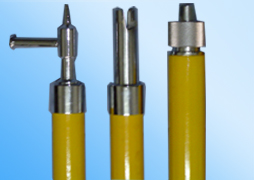
1. DC Series Docking Multi purpose Operating Rod Description:
The DC series high-voltage operating rod (switching rod) is one of the commonly used safety tools in electrical equipment switching operations. The product is developed and produced in accordance with the technical requirements of the national standard "GB13398-92 General Technical Conditions for Live Working Insulated Rod" of the People's Republic of China, and has all passed the type test of the National Electric Safety Tool Quality Supervision Inspection and Testing Center. The DC series docking type high-voltage multi-purpose operating rod is used for opening and closing high and low voltage switches, disassembling fuses, tightening screws, and other operations. It is suitable for voltage levels of 10, 35, 110, 220, and 500KV. The environmental conditions for the use of this product are: ambient temperature: -25 to+55 ℃; Relative humidity: ≤ 90%.
DC Series Docking Multi purpose Operating Rod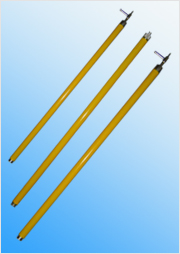
DC Series Docking Multi purpose Joystick -1
2. Specification Table of Operating Rod
|
serial number |
Product name |
Model |
unit |
remark |
|
one |
Docking type high-voltage multi-purpose operating rod |
DC-35 type |
Pay |
Two section total length of 2M |
|
two |
Docking type high-voltage multi-purpose operating rod |
DC-35A type |
Pay |
2、 Three section total length of 3M |
|
three |
Docking type high-voltage multi-purpose operating rod |
DC-110 type |
Pay |
Three section style with a total length of 4M |
|
four |
Docking type high-voltage multi-purpose operating rod |
DC-220 type |
Pay |
Three section design with a total length of 4.5M |
|
five |
Docking type high-voltage multi-purpose operating rod |
DC-220A type |
Pay |
Three section style with a total length of 5M |
|
six |
Telescopic High Voltage Multipurpose Operating Rod |
DC-35 type |
Pay |
Two section total length of 2M |
|
seven |
Telescopic High Voltage Multipurpose Operating Rod |
DC-110 type |
Pay |
Two section total length of 3M |
|
eight |
Telescopic High Voltage Multipurpose Operating Rod |
DC-110 type |
Pay |
Three section total length of 3M |
|
nine |
Telescopic High Voltage Multipurpose Operating Rod |
DC-220 type |
Pay |
Three section style with a total length of 4M |
|
ten |
Telescopic High Voltage Multipurpose Operating Rod |
DC-220 type |
Pay |
Three section design with a total length of 4.5M |
|
eleven |
Direct discharge rod |
ZF-1 type |
Pay |
Pole 1M with copper wire 25mm 2 × 5M |
|
Serial number |
Single section length (m) |
Number of sections |
Grip length (m) |
Rod diameter (mm) |
|
one |
one |
two |
zero point eight zero |
φ29 |
|
two |
one |
three |
zero point eight zero |
φ29 |
|
three |
one |
three |
zero point eight zero |
φ32 |
|
four |
one |
four |
zero point eight zero |
φ32 |
|
five |
one point five |
two |
one |
φ29 |
|
six |
one point five |
two |
one |
φ32 |
|
seven |
one point five |
three |
one |
φ32 |
|
eight |
one point five |
four |
one |
φ32 |
|
nine |
two |
one |
one |
φ29 |
|
ten |
two |
two |
one |
φ32 |
|
eleven |
two |
three |
one |
φ32 |
|
twelve |
two |
four |
one |
φ32 |
|
Rated voltage (KV) |
Shortest effective insulation length (m) |
The length of the end metal joint shall not exceed (m) |
The grip length shall not be less than (m) |
|
ten |
zero point seven zero |
zero point one zero |
zero point six zero |
|
thirty-five |
zero point nine zero |
zero point one zero |
zero point six zero |
|
sixty-three |
one |
zero point one zero |
zero point six zero |
|
one hundred and ten |
one point three zero |
zero point one zero |
zero point seven zero |
|
two hundred and twenty |
two point one zero |
zero point one zero |
zero point nine zero |
|
three hundred and thirty |
three point two zero |
zero point one zero |
one |
|
five hundred |
four point one zero |
zero point one zero |
one |
|
rated voltage |
Distance between experimental electrodes |
The breakdown voltage of the power frequency internal network shall not be less than |
1-minute power frequency withstand voltage |
|
ten |
zero point four zero |
one hundred and twenty |
one hundred |
|
thirty-five |
zero point six zero |
one hundred and eighty |
one hundred and fifty |
|
sixty-three |
zero point seven zero |
two hundred and ten |
one hundred and seventy-five |
|
one hundred and ten |
one |
three hundred |
two hundred and fifty |
|
two hundred and twenty |
one point eight zero |
five hundred and ten |
four hundred and fifty |
|
Rated voltage (KV) |
Distance between experimental electrodes (m) |
5-minute power frequency withstand voltage (KV) |
Operating impulse withstand voltage (KV) |
|
three hundred and thirty |
two point eight zero |
four hundred and twenty |
nine hundred |
|
five hundred |
three point seven zero |
six hundred and forty |
one thousand one hundred and seventy-five |
|
load type |
Allowable load value |
Minimum destructive load value | ||
|
Nominal diameter of operating rod (mm) |
Nominal diameter of operating rod (mm) | |||
|
28 and below |
Above 28 |
28 and below |
Above 28 | |
|
Bending moment N · m |
≮90 |
≮110 |
≮270 |
≮330 |
|
Stretching force N |
≮600 |
≮1800 | ||
|
Twisting torque N · m |
≮30 |
≮90 | ||
4. Usage and precautions
Telescopic operating lever
4.1 To ensure the safety of personnel and equipment, the operating lever should be stored in a dedicated location with dry air circulation.
4.2 The use of operating rods on electrical equipment should comply with the relevant provisions of the electrical safety work regulations.
Before use, the corresponding voltage level qualified operating lever should be selected according to the rated voltage of the electrical equipment for operation.
5. Regular testing
5.1 The operating lever must undergo regular preventive tests according to the time limit specified in the electrical safety engineering regulations.
Before conducting preventive tests, a visual inspection should be carried out. If obvious defects such as cracks are found on the insulation rod, it is not advisable to conduct preventive tests again. It should be promptly sent for repair or replacement.
5.3 The operating rod should undergo a power frequency withstand voltage test according to the preventive testing standards (see preventive testing standards for details), and the rod body should be qualified if there is no heating, internal network, or breakdown phenomenon.
 Related Products:
Home|Quality Commitment|Ordering|Payment method|product delivery|support|Disclaimer|Contact Us
Copyright®2011 www.91way.com Copyright.
Phone:+86-21-66770508 +86-13916500500 Fax:+86-21-66108310
Email:91way@163.com Wechat:40606422
沪ICP备2021005791号  沪公网安备31010702003255号
 Your location:




