Product Description:
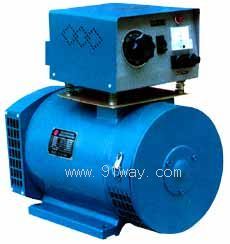
The SDC series three-phase AC power generation (welding) dual-use machine, when paired with an internal combustion engine, can be used as a fixed or mobile dual-use small power station, suitable for lighting and power supply for single person manual arc welding in areas and units without power supply. In order to keep the dual-purpose machine in good working condition and prolong the service life of the motor
SDC series three-phase AC power generation (welding) dual-use machine data:
|
model |
SDC-10 |
model |
SDC-10 |
| Rated power (kW) |
ten |
Welding no-load voltage (volts) |
seventy-five |
| Rated voltage (volts) |
four hundred |
Welding current (A) |
two hundred and thirty |
| Rated current (A) |
eighteen point one |
Welding working voltage (volts) |
30-35 |
| power factor |
zero point eight |
Load duration rate (%) |
forty |
| Speed (RPM) |
one thousand and five hundred |
Adjustment range of welding current |
100-280 |
| phase number |
three |
Power generation working mode |
continuous |
| Frequency (Hertz) |
fifty |
The appearance and installation dimensions of the dual-purpose motor.
The SDC series three-phase AC power generation (welding) dual-use machine is a protective horizontal type that uses axial ventilation.
After the installation of the dual-purpose motor, before use, the protective cover should be opened and the electric ring should be wiped clean. If there is paint or other adhesion, it can be wiped off with banana oil or fine sandpaper.
Rotate the magnetic field variable resistor on the switch board in the direction of the label head to the end point, and drive the dual-purpose machine to the rated speed. At this time, the pointer of the voltmeter should indicate around 400 volts, which can be used for power transmission or welding.
When a dual-purpose machine is used as a generator, if accurate frequency and voltage are required. The speed of the adjustable magnetic field variable resistor and prime mover can be measured using a tachometer or a frequency meter with corresponding frequency and voltage range connected to the output terminal. The speed change of the dual-purpose motor is 105% of the rated speed under no-load and rated speed under full load.
When a dual-purpose motor is used for single-phase welding, the variable resistor on the switch box can be adjusted to the appropriate current position according to the required current of the welding rod and workpiece for welding. If a smaller current is needed for welding, in addition to adjusting the magnetic field variable resistor, the speed of the prime mover can also be reduced to achieve this.
When a dual-purpose machine is used as both a lighting power source and for welding, the sum of the two load powers must not exceed the rated power indicated on the nameplate. If the welding is already at full load, this machine can only provide the necessary lighting for welding, and long-term overloading is not allowed to affect the service life of the motor. The current used for various diameter welding electrodes is shown in the table below.
|
Welding rod diameter (mm) |
Welding current (A) |
Welding rod diameter (mm) |
Welding current (A) |
|
one point six |
25-40 |
four |
160-210 |
|
two |
40-65 |
five |
200-270 |
|
two point five |
50-80 |
five point eight |
260-399 |
|
three point two |
100-130 |
Before using the dual-purpose machine, the power transmission line and welding cable joints must be securely connected to the wiring terminals to avoid burning out the wiring terminals due to poor contact.
The dual-purpose machine should maintain a good ventilation system during use and should not be covered with debris on the motor to avoid hindering heat dissipation.
When the dual-purpose machine is used alone for power generation, the welding cable should be removed or protected. When the dual-purpose machine is used alone for welding, unused three-phase power lines should be removed to avoid short circuits and electric shock accidents, as short circuits may damage the rectifier.
Before stopping the dual-purpose machine, it is necessary to first reduce the speed of the prime mover, then remove the load, and finally stop. If the machine is stopped with a load, it may lose residual magnetism.
The generator has been checked for correct wiring, but it does not generate electricity after operation. The possible reasons and troubleshooting methods are as follows:
No residual magnetism. Newly installed motors may lose residual magnetism due to prolonged storage or generator stoppage under load. A 6-12V DC power supply can be used to charge the magnetic field, with the positive terminal connected to F2 and the negative terminal connected to F2. Reverse connection is not allowed.
Loose or disconnected wiring connectors. Tighten the nut and re weld.
The secondary winding is open or the main side of the inverter is open. Replace and rewind.
Rectifier component breakdown, replace with new component.
Short circuit or open circuit of the magnetic pole winding, repair and replace the magnetic pole coil.
Poor contact between the electric brush and the collector ring or insufficient pressure of the electric brush spring, clean the dirt on the surface of the collector ring, and adjust the electric brush pressure.
The speed is too low. Due to not reaching the self-excited speed value, no power is generated. Use a tachometer to measure and increase the speed.
If the magnetic field variable resistor is not adjusted to the short-circuit position, or there is poor contact and open circuit, check the contact quality between the magnetic field variable resistor and each connection point, and adjust it to the short-circuit position. If the magnetic field variable resistor is open circuit, replace it with a magnetic field variable resistor of the same model and specification.
maintain:
(1) The dual-purpose machine should be stored in a dry place. If it is placed on muddy or cement ground, it should be elevated with wood and covered with oilcloth to prevent other debris from entering.
(2) Dirt, water droplets, metal debris, or other foreign objects should be avoided from entering.
(3) The motor should not be used in areas with excessive water vapor and dust, or in areas with flammable gases.
inspection and repair
The dual-use machine should be inspected at least once a year, and the inspection steps are as follows:
(1) Remove the window cover and protective cover, remove the dust accumulated inside the motor, and then blow it clean with compressed air.
(2) Check the wear of the collector ring. The surface of the collector ring should be kept flat and smooth. If there are any unevenness, a new collector ring must be replaced.
(3) Check the pressure and wear of the electric brush spring. If the electric brush is worn too much, it should be replaced in a timely manner.
(4) Check if the bearing oil is clean, and replace it promptly if uneven color is found.
Precautions during maintenance
(1) The disassembled parts should be properly stored and not lost or stained with dirt.
(2) When removing the wire head, it is necessary to recognize the markings or make proper markings to avoid making mistakes during reinstallation.
(3) When installing the electric brush, attention should be paid to its preparation position and maintain good contact with the collector ring.
(4) After installing the motor, gently rotate the rotor by hand to check if it rotates smoothly.

 Your location:Home → motor products → generator → synchronous generator → SDC series three-phase AC power generation (welding) dual-use machine

 Zoom in on the image
 Related Products:
 generator
  Start the generator
 沪公网安备31010702003255号
