
 Your location:Home → Special electrical appliances → Marine equipment → YDKS type marine soft logic control monitoring and alarm device
 |
Product name: | YDKS type marine soft logic control monitoring and alarm device | |||||
| specification: |   Zoom in on the image Zoom in on the image |
||||||
| Category: | Special electrical appliances -- Marine equipment | ||||||
| |
Price: | factory price | |||||
| Brand: | Shanghai | ||||||
| Place of Origin: | China | ||||||
| |
Available Quantity: | batch | |||||
| delivery cycle: | Spot goods (or inquire by telephone) | ||||||
 |
|
||||||
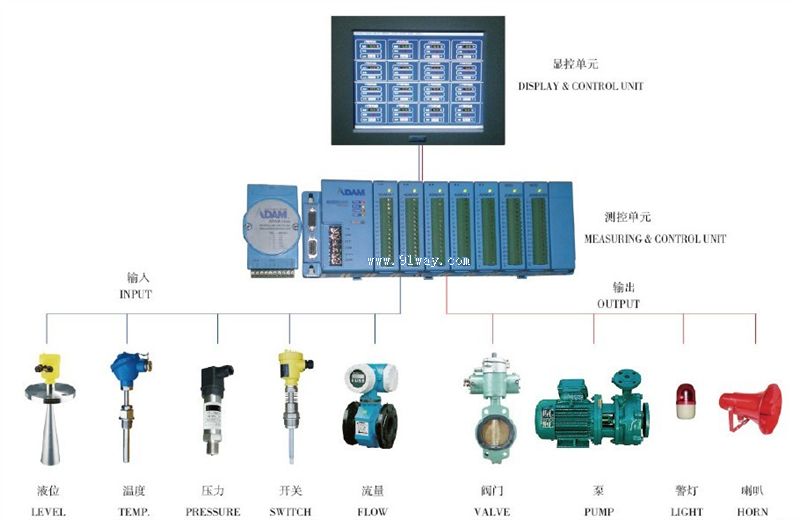
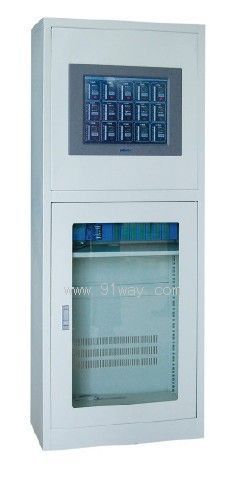
The YDKS marine soft logic control monitoring and alarm device adopts advanced architecture high-tech products, with powerful functions and flexible configuration capabilities. The device can accept liquid level, temperature, pressure, and other various signals collected by sensors, and after program processing, achieve comprehensive measurement, display, alarm, and control functions. Suitable for various types of ships' engine room monitoring and alarm, pump valve control, liquid level telemetry, ballast control, balance measurement and control, deflection measurement, and automation comprehensive measurement and control of other industrial systems.
The YDKS marine soft logic control monitoring and alarm device adopts an advanced embedded dual core structure. Both the upper and lower computers are equipped with CPU modules, which run system software independently. The upper and lower computers communicate through fieldbus, and the lower computer unit can work independently without the upper computer, forming a highly reliable system hardware configuration. At the same time, using fieldbus for communication not only improves anti-interference ability but also facilitates system redundancy, further enhancing reliability.
The upper computer adopts an embedded tablet computer, which not only has the powerful processing capability of a computer but also has the characteristics of being sturdy and compact, suitable for working in small spaces and harsh conditions such as ships. At the same time, the upper computer runs reliably and has a good human-machine interface, which can run various measurement and control programs such as liquid level telemetry, valve monitoring, longitudinal and transverse tilt measurement, deflection measurement, etc., meeting the various regulatory requirements for ship operation.
The lower computer adopts advanced soft logic controllers, which have stronger computing and processing capabilities compared to general PLCs. The lower computer also has multiple interfaces such as RS485, RS232, TP/IP, and universal communication protocols, which facilitate remote signal transmission or communication with third-party devices. The lower computer also has flexible configuration capabilities, which can configure different acquisition and control modules according to different control requirements, better saving hardware costs for customers.
The system can accept various value signals from on-site sensors, which are transmitted to the soft logic controller (PAC) through the acquisition module. The PAC calculates and processes these signals, and sends out various display, control, and alarm signals through the driving output module. At the same time, PAC converts signals into digital quantities and provides them to the upper computer through various interfaces. The upper computer can display and set various values, equipment status, and alarm information, and complete functions such as storage and indicators.
 Related Products:
 DZ931 Marine molded case circuit breaker DZ935 Marine miniature circuit breaker DW931 series marine frame circuit breaker MX2-H series marine high-efficiency three-pha.. YBVF2-H series explosion-proof high-efficienc.. JZ-H series marine lifting three-phase asynch.. JBZ2-H series marine lifting explosion-proof .. YBX3-H series marine explosion-proof three-ph.. JY-H series marine three-phase asynchronous m.. CY-H series marine three-phase asynchronous m.. Related articles:
 explosion-proof component Ex-proof master order
  Ex-proof electrical equipment explosion-proof equipment Explosion proof starter Ex-proof operation column ex-proof distribution box explosion-proof junction box Explosion-proof sensor Marine electrical appliances Marine warning device Marine power supply marine instrument Marine equipment
  Chemical anti-corrosion Transportation appliances lighting fixtures
 Home|Quality Commitment|Ordering|Payment method|product delivery|support|Disclaimer|Contact Us
Copyright®2011 www.91way.com Copyright.
Phone:+86-21-66770508 +86-13916500500 Fax:+86-21-66108310
Email:91way@163.com Wechat:40606422
沪ICP备2021005791号  沪公网安备31010702003255号

