
 Your location:Home → Special electrical appliances → Marine power supply → CDGS series marine transformers
 |
Product name: | CDGS series marine transformers | |||||
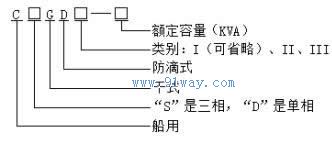
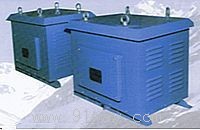
| specification: |   Zoom in on the image Zoom in on the image |
||||||
| Category: | Special electrical appliances -- Marine power supply | ||||||
| |
Price: | factory price | |||||
| Brand: | Shanghai | ||||||
| Place of Origin: | China | ||||||
| |
Available Quantity: | batch | |||||
| delivery cycle: | Spot goods (or inquire by telephone) | ||||||
 |
|
||||||
 Related Products:
 DZ931 Marine molded case circuit breaker DZ935 Marine miniature circuit breaker DW931 series marine frame circuit breaker MX2-H series marine high-efficiency three-pha.. YBVF2-H series explosion-proof high-efficienc.. JZ-H series marine lifting three-phase asynch.. JBZ2-H series marine lifting explosion-proof .. YBX3-H series marine explosion-proof three-ph.. JY-H series marine three-phase asynchronous m.. CY-H series marine three-phase asynchronous m.. Related articles:
 explosion-proof component Ex-proof master order
  Ex-proof electrical equipment explosion-proof equipment Explosion proof starter Ex-proof operation column ex-proof distribution box explosion-proof junction box Explosion-proof sensor Marine electrical appliances Marine warning device Marine power supply
  marine instrument Marine equipment Chemical anti-corrosion Transportation appliances lighting fixtures
 Home|Quality Commitment|Ordering|Payment method|product delivery|support|Disclaimer|Contact Us
Copyright®2011 www.91way.com Copyright.
Phone:+86-21-66770508 +86-13916500500 Fax:+86-21-66108310
Email:91way@163.com Wechat:40606422
沪ICP备2021005791号  沪公网安备31010702003255号

