
 Your location:Home → motor products → torque motor → AC torque motor → YDLJ series torque three-phase asynchronous motor
 |
Product name: | YDLJ series torque three-phase asynchronous motor | |||||
| specification: |   Zoom in on the image Zoom in on the image |
||||||
| Category: | motor products -- AC torque motor | ||||||
| |
Price: | factory price | |||||
| Brand: | |||||||
| Place of Origin: | China | ||||||
| |
Available Quantity: | batch | |||||
| delivery cycle: | Spot goods (or inquire by telephone) | ||||||
 |
|
||||||
The YDLJ series torque three-phase asynchronous motor is a special motor with soft mechanical characteristics and a wide range of speed regulation. When the load increases, the speed of the motor can automatically decrease, while the output torque increases to maintain balance with the load. The locked rotor torque of the torque motor is high, the locked rotor current is small, and it can withstand a certain period of locked rotor operation. Due to the high voltage and loss of the rotor, the heat generated is also significant, especially during low-speed operation and locked rotor. Therefore, the motor is equipped with an independent axial or centrifugal fan on the rear cover (except for those with output torque of 100 machine base sizes and below) for forced ventilation cooling. The torque motor is equipped with a thyristor control device, which can adjust voltage and speed, with a speed range of up to 1:4 and a speed change rate of ≤ 10%. The characteristics of this series of motors make them suitable for winding, unwinding, stalling, speed regulation and other applications, and are widely used in industrial fields such as textiles, wires and cables, metal processing, papermaking, rubber, plastics, and printing machinery.
Application scope:
1、 Winding: Winding is a very important process in the processing of wires and cables, textiles, metal processing, papermaking, and other industries. The diameter of the roll gradually increases during product winding, and it is very important to maintain the tension of the rolled product unchanged throughout the process, because excessive tension can thin or even break the wire diameter, or cause uneven thickness of the product, while insufficient tension can cause loose winding. In order to maintain constant tension during the winding process, it is necessary to increase the output torque of the motor that drives the drum when the diameter of the product wound onto the reel increases. At the same time, to maintain the same linear speed of the wound product, the speed of the reel must be reduced accordingly. The mechanical characteristics of the torque motor can precisely meet this requirement.
Figure 1 shows a schematic diagram of the winding process and the matching curve between the torque speed characteristics of a typical torque motor and the winding tension. In the shaded area where two curves intersect within the speed range of 1/3 to 2/3N0 of the torque motor (roll to diameter ratio 1:2), the winding characteristics are most ideal. At this point, P=F · V=constant, that is, T · n=constant (P: power, F: tension, V linear velocity, T: torque, n: motor speed). For roll to diameter ratios of 1:3, 1:4, or greater, the requirement for controlling tension can be achieved to some extent, but with slightly lower accuracy. For situations where the roll to diameter ratio is large and tension control accuracy is high, dual speed or three speed torque motors can be used to achieve this.
Usually, there are many varieties and specifications produced by each device. When the materials and specifications change, the required tension and speed are also different. In this case, a voltage regulator can be used to adjust the motor terminal voltage, which can achieve the purpose of increasing or decreasing the motor output torque.
Figure 2 shows the characteristic curve family of motors with different voltage torque, where the relationship between output torque and voltage is T α U2.
The torque motor has advantages when wound:
1. The tension remains stable during the process from an empty disc to a full disc.
2. The tension adjustment is convenient and can be repeated correctly after one adjustment.
3. Reliable structure, easy maintenance, control, easy operation, and low cost.
2、 Open book (braking constant power characteristic)
Uncoiling, also known as unwinding, unwinding, or rewinding, is shown in Figure 3. In industrial production, it is sometimes necessary to transport products wound on a drum to the next process. During the conveying process, it is required to apply a tension opposite to the transmission direction to the product, while maintaining a constant linear velocity and back tension of the product transmission as the cylinder diameter changes. This requires the motor to have a constant braking power characteristic. By utilizing the mechanical characteristics of torque motors during braking,
As shown in Figure 4, loosening the rolled products before processing can prevent the quality of the products from being affected by looseness and tightness during the unwinding process. The principle is analyzed in the same way as during winding.
3、 Stepless speed regulation
The mechanical characteristics of torque motors are very soft. When the load increases, the motor speed decreases and the output torque increases, which is proportional to the square of the voltage. If the load is fixed, the speed of the motor will vary with the voltage, as shown in Figure 5. Therefore, on a device with a constant load, any speed can be obtained by changing the input voltage of the motor through a voltage regulating device. However, when the torque motor operates at low speeds, its efficiency is extremely low, which is not conducive to long-term low-speed operation.
4、 Blocked rotation
In some special occasions, it is sometimes required for the motor to maintain a static torque for a period of time, such as maintaining tension during the initial stage of cable winding; Forging clamping devices for large forging presses, etc. Due to the high impedance of torque motors; Its stalling current is relatively small, and forced ventilation is used, so it can meet the stalling requirements for a certain period of time. The allowable stalling time should be based on the calibration value on the nameplate. If a longer stalling time is required, a larger torque motor can be selected by reducing the terminal voltage of the torque motor.
5、 Other
Torque motors can also be flexibly applied according to their various characteristics, such as having the characteristics of DC series excited motors, which can partially replace DC motors; For example, due to the high resistance characteristics of its rotor and the large starting (stalling) torque, it can be applied in opening and closing gates (valves) and drag systems with high resistance torque; It can also be used in devices with frequent forward and reverse rotation or other similar mechanical actions due to its high starting (stall) torque, low starting (stall) current, and high mechanical strength of solid rotors.
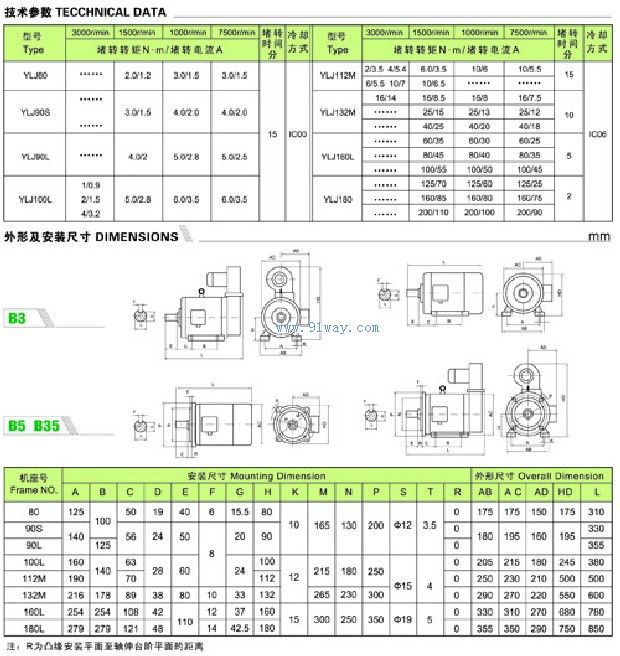
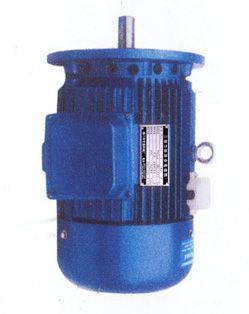
YDLJ series torque three-phase asynchronous motor
 Related Products:
 J90LWX03 Type Permanent Magnet DC Brushless T.. J91LWX002,J91LWX003 Type Permanent Magnet DC .. J83LWX01,J83LWX011 Type Permanent Magnet DC B.. J80LWX01 Type Permanent Magnet DC Brushless T.. J75LWX01 type brushless DC torque motor J70LWX01 type brushless DC torque motor J45LWX01-Z Type Permanent Magnet DC Brushless.. J40LWX01A1-Z Type Permanent Magnet DC Brushle.. J40LWX01-Z,J40LWX01-Z1 Type Permanent Magnet .. J30LWX02-Z1,J30LWX04-Z Type Permanent Magnet .. Related articles:
 generator
  high-voltage motor synchronous motor DC motor asynchronous motor Special motor servo motor Transportation motor Speed motor single-phase motor stepper motor synchro torque motor DC torque motor AC torque motor
  Brushless torque motor Angular torque motor coreless motor motor driver motor speed controller encoder
 Home|Quality Commitment|Ordering|Payment method|product delivery|support|Disclaimer|Contact Us
Copyright®2011 www.91way.com Copyright.
Phone:+86-21-66770508 +86-13916500500 Fax:+86-21-66108310
Email:91way@163.com Wechat:40606422
沪ICP备2021005791号  沪公网安备31010702003255号

