
 |
Product name: | CBX type bypass valve | |||||
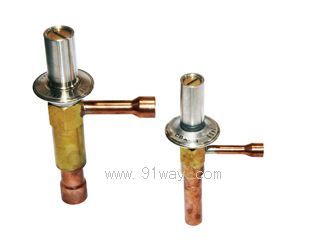
| specification: |   Zoom in on the image Zoom in on the image |
||||||
| Category: | Pump valve fittings -- adjusting valve | ||||||
| |
Price: | factory price | |||||
| Brand: | Shanghai | ||||||
| Place of Origin: | China | ||||||
| |
Available Quantity: | batch | |||||
| delivery cycle: | Spot goods (or inquire by telephone) | ||||||
 |
|
||||||
The CBX type bypass valve is used to achieve system energy regulation in refrigeration compressor units without energy unloading mechanisms.
CBX type bypass valve is a mechanical expansion valve that uses changes in outlet pressure to alter flow rate and maintain a stable evaporation temperature.
The CBX type bypass valve can prevent the suction pressure of the refrigeration compressor unit from not being lower than its minimum limit value.
Welding with ODF copper tube interface.
Applicable media: various HFC and HCFCs.
The safe working pressure is 45 bar.
Feature Introduction
The main function of CBX type bypass valve is to automatically adjust the closing or opening of the valve when the outlet pressure changes, keeping the outlet pressure constant at the set value and not affected by the inlet pressure (within a certain range).
The function of CBX type bypass valve as a constant pressure automatic expansion valve
If the inlet of this bypass valve is connected to the condensing pressure and the outlet of the valve is connected to the inlet of the evaporator, which is usually the installation position of the thermal expansion valve, under such installation adjustment, when the compressor is not turned on, due to the high evaporating pressure, the bypass valve is in a closed state. After turning on, as the compressor runs, the evaporating pressure gradually decreases. When it decreases below the set value, the bypass valve automatically opens, and the refrigerant fluid enters the evaporator through the throttling effect of the valve. After the evaporator absorbs heat, the evaporating pressure increases and the valve tends to close. At this time, due to the operation of the compressor, the evaporating pressure is reduced again, and the valve is in an open state. During the entire operation process, the valve is in dynamic equilibrium, maintaining the evaporating pressure at around the set value. The amplitude of its evaporation pressure fluctuation is related to the capacity of the valve and is not affected by changes in condensation pressure (or ambient temperature), resulting in stable evaporation pressure.
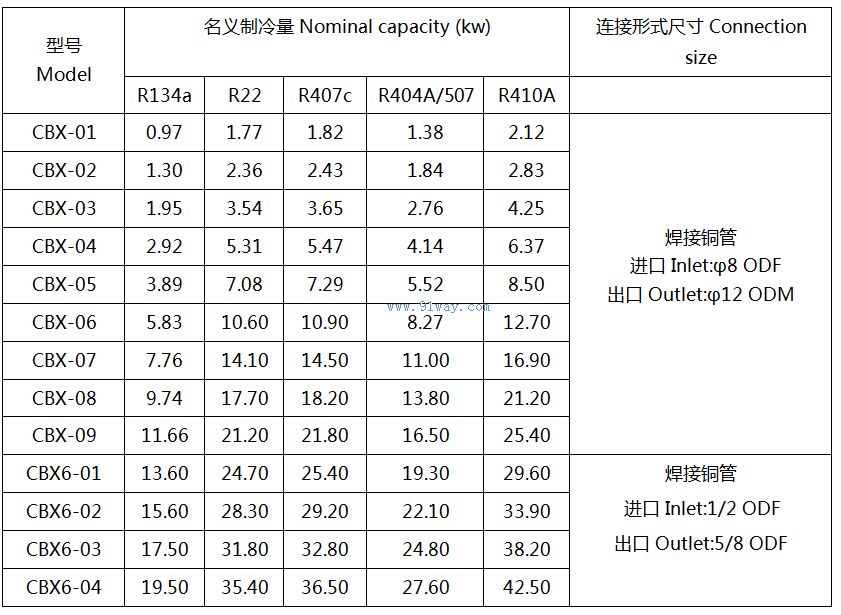
Model and Parameters Technical data
 Related Products:
 RTB series thermal expansion valve R410A series thermal expansion valve HZF series stainless steel check valve EGSC series lined plastic single seat regulat.. YBDF2 series valve electric device with three.. DFB-20/6 Mining explosion-proof solenoid valv.. DFH20/7 Mining intrinsic safety electric ball.. DFB20/7 Mining explosion-proof electric ball .. CA200171 type solenoid valve ZJHY Micro flow pneumatic control valve Related articles:
 Pump products valve products
  foot valve butterfly valve gate valve ball valve angle valve sight glass solenoid valve adjusting valve
  control valve globe valve plunger valve Plug valve balance valve diaphragm valve steam trap exhaust valve Slurry valve safety valve pulse valve pressure relief valve check valve vacuum valve electric valve marine valve Warning valve servo valve expansion valve pneumatic valve Gas valve Fluorine lined valve Rubber lined valve blind plate valve Sanitary valve Stacking valve Directional control valve check valve Pipe force valve throttle valve overflow valve proportional valve explosion-proof valve filter Drain valve Breathing valve|flame arrester Instrument/Needle valve actuator pipe fittings sealing element fan
 Home|Quality Commitment|Ordering|Payment method|product delivery|support|Disclaimer|Contact Us
Copyright®2011 www.91way.com Copyright.
Phone:+86-21-66770508 +86-13916500500 Fax:+86-21-66108310
Email:91way@163.com Wechat:40606422
沪ICP备2021005791号  沪公网安备31010702003255号
 Your location:
