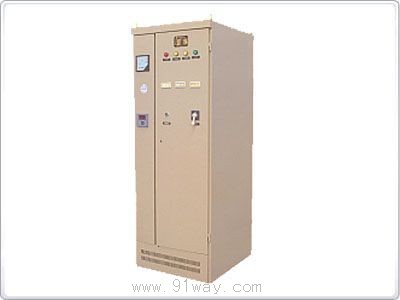
SKG Electro hydraulic Variable Resistance Starter Cabinet
The electro-hydraulic variable resistance starting cabinet is a new type of starting equipment successfully developed to improve the starting performance of large and medium-sized wound asynchronous motors or induction synchronous motors. He overcame the old starter. Such as frequency sensitive rheostat Oil immersed rheostat The impact current of cast iron resistors is high Problems such as low voltage, difficulty starting, and inconvenient operation. This product is particularly suitable for building materials Chemical industry Starting of ball mills, rolling mills, air compressors, large pumps, large fans, and large irrigation motors in industrial sectors such as metallurgy, steel, and mining.
1、 Performance characteristics:
1. Low starting current
The current at the moment of starting is less than 1.3 times the rated current, while the current during acceleration is equal to the normal operating current, so that the motor has no additional starting temperature rise, and greatly reduces the impact of starting on the voltage and current of the power grid. This effectively protects the motor and power transformer, prolonging the service life of the motor.
2. Smooth start-up
Due to the infinite reduction in resistance value of the rotor circuit connected in series, while ensuring a constant power transmission for the motor starting cabinet, smooth starting of the motor is achieved, eliminating multiple mechanical stress impacts on the reducer and dragged equipment caused by staged starting, promoting the protection of the reducer and dragged equipment, and extending their service life.
3. Smooth starting reduces the requirements of motor starting on the power grid or power transformer:
As long as the power grid can ensure the normal operation of the motor, it can start smoothly, especially suitable for areas with power shortages, large voltage fluctuations in the power grid, and low voltage. It will not affect production due to power shortages and low voltage, and can save one-time investment.
4. Can be started continuously:
Each time the starter is started, the temperature rise of the starter itself is less than 3 ℃, and the motor has no additional starting temperature rise. Therefore, the motor can be started continuously multiple times without sparks and with low noise.
5. Energy saving:
Compared with frequency sensitive resistors, motor energy saving can save about 12 degrees of electricity per start-up.
6. All operations are automated, the startup program is simple and reliable.
7. The structure is simple Easy to maintain.
2、 Main structure:
The structure of the SKG series electro-hydraulic variable resistance starter cabinet consists of upper and lower parts of the liquid variable resistance cabinet. The liquid variable resistance cabinet is the main body of this equipment, which includes an electro-hydraulic box, conductive liquid, and electrode mechanical transmission settings. Liquid detection components, temperature sensors, etc. The control cabinet consists of a control panel and an operation indicator panel.
3、 Basic principles
It utilizes the liquid resistance between two parallel plates in a conductive liquid By using a mechanical transmission device, the relative distance between the plates gradually decreases until they come into contact, causing the resistance in the motor rotor circuit to continuously decrease and eventually reach zero. Realize smooth starting of heavy-duty wound large and medium-sized motors.
4、 Main technical parameters of SKG series electro-hydraulic variable resistance starter cabinet: (As the product is updated, the appearance and installation dimensions may change, please refer to the specific product)
|
Electro hydraulic resistance starter cabinet |
Specification of selected wire type asynchronous motor |
Starting current ratio Lg/le |
Normal working degree of electrolyte (℃) |
Dimensions of Variable Resistance Cabinet |
|
Power KW |
Rated voltage V |
|
SKG-1 |
55-245 |
3800 3000 6000 |
≤1.13 |
0-60℃ |
200x770x600 |
|
SKG-2 |
245-380 |
380 3000 6000 10000 |
≤1.13 |
0-60℃ |
2150x870x700 |
|
SKG-3 |
570-630 |
380 3000 6000 10000 |
≤1.13 |
0-60℃ |
2200x900x800 |
|
SKG-4 |
800-1000 |
380 3000 6000 10000 |
≤1.13 |
0-60℃ |
2200x900x800 |
|
SKG-5 |
1000-1600 |
380 3000 6000 10000 |
≤1.13 |
0-60℃ |
2200x1000x900 |
|
SKG-6 |
1800-2500 |
380 3000 6000 10000 |
≤1.13 |
0-60℃ |
2200x1000x900 |
5、 Operation steps and precautions
Firstly, check if the power supply of the liquid starter cabinet is turned on After turning on the power, the shutdown indicator light will turn on.
2. Check if the movable electrode of the liquid starter cabinet is in the starting position (i.e. the movable electrode has touched the up stroke switch)
3. If there is a sudden power outage during startup (before normal operation), wait until the power is restored Wait for the active electrode to automatically reset before starting.
4. The entire start-up process takes 25-30 seconds. If the contactor is cut off during normal start-up, it will automatically cut off and the movable electrode will automatically reset. The automatic reset indicator light is on The operation indicator light is on.
During the entire start-up process The liquid cabinet does not require manual operation
6. Precautions: During the first test run, pay attention to the direction of the movable electrode When the power supply of the liquid starter cabinet is not turned on, manually raise the movable electrode automatically, which is correct Conversely, it is an error. Simply replace the three-phase power supply. In addition, check the liquid level in the liquid cabinet every three months to see if it has decreased. If it has, add clean water.
6、 Maintenance and Inspection of SKG Series Electro Hydraulic Variable Resistance Starter Cabinet
1. Is the resistance liquid level within the specified range (based on the immersion of the active electrode plate).
2. Is the temperature of the resistive fluid within the specified range.
3. Whether each electrical component is damaged or the wiring is loose.
4. Check if the contact block of the limit switch is loose or deformed.
5. Is there any abnormal noise in the transmission mechanism.
6. Whether there are overload and cut-off alarms.

 Your location:Home → High voltage electrical appliances → High voltage starter → SKG series electro-hydraulic variable resistance starter cabinet

 Zoom in on the image
 Related Products:
 high-voltage circuit breaker
  High voltage grounding switch
 沪公网安备31010702003255号
