
 Your location:Home → low-voltage electrical apparatus → low-voltage circuit breaker → Molded Case Circuit Breaker → M-NZML series plastic case circuit breaker with residual current protection
 |
Product name: | M-NZML series plastic case circuit breaker with residual current protection | |||||
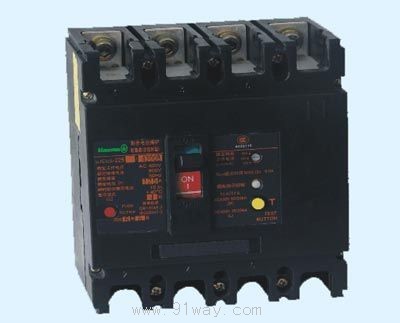
| specification: |   Zoom in on the image Zoom in on the image |
||||||
| Category: | low-voltage electrical apparatus -- Molded Case Circuit Breaker | ||||||
| |
Price: | factory price | |||||
| Brand: | |||||||
| Place of Origin: | China | ||||||
| |
Available Quantity: | batch | |||||
| delivery cycle: | Spot goods (or inquire by telephone) | ||||||
 |
|
||||||
Scope of application
The M-NZML series plastic shell circuit breaker with residual current protection (hereinafter referred to as the circuit breaker) is one of the new circuit breakers developed and researched by our factory using international advanced design and manufacturing technology. Its rated insulation voltage is 800V, suitable for use in circuits with AC 50Hz, rated working voltage of 400V, and rated working current up to 225A for frequent switching and infrequent motor starting. Circuit breakers have overload, short circuit, and undervoltage protection functions, which can protect lines and power equipment from damage. At the same time, they can also provide protection against long-term grounding faults that cannot be detected by current protection and may cause fire hazards.
Circuit breakers are classified into two types based on their rated ultimate short-circuit breaking capacity (LCU): H-type (higher breaking type) and L-type (high breaking type). This circuit breaker has the characteristics of small size, high breaking height, short arcing, and anti vibration
This circuit breaker can be installed vertically or horizontally
This circuit breaker cannot be reversed, that is, only 1, 3, and 5 are allowed to be connected to the power line, and 2, 4, and 6 are allowed to be connected to the load line.
Main Features
① Conventional leakage protection module with residual current protection circuit breaker working power supply
Sampling is two-phase, and this series of circuit breakers is three-phase. If any phase is missing, the circuit breaker will be disconnected
The leakage protection module of the device can still work normally;
② The rated residual operating current I △ n and maximum disconnection time are determined based on the actual situation
Field adjustable;
③ When the phase voltage drops to 50V, the leakage protection module can still work normally;
④ Equipped with leakage alarm output function;
⑤ Compliant with the electromagnetic compatibility requirements of Appendix B of IEC60947;
⑥ The external volume is the same as that of the ZJM1 series circuit breaker, and the installation has the same specifications
Good interchangeability.
Model and meaning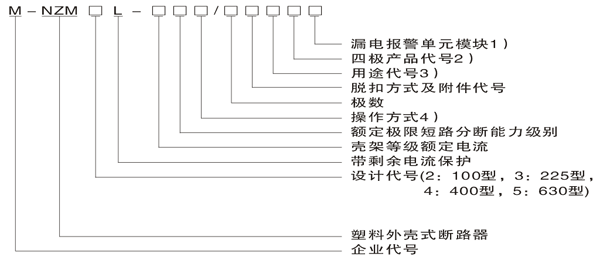
Note:
Module without leakage alarm unit without code; The working mode is temporarily represented by I; The second working mode is denoted as II.
Three pole products have no code, and are divided into four levels: A, B, C, and D.
The circuit breaker for power distribution has no code, and the circuit breaker for protecting motors is represented by 2.
The handle can be operated directly without a code; Electric operation P represents; The handle operation is represented by Z.
Compliance standards for circuit breakers
This circuit breaker product complies with the following standards:
IEC60947-1 and GB/T14048.1 General Provisions
IEC60947-2 and GB14048.2 Low Voltage Circuit Breakers and Appendix B Circuit Breakers with Residual Current Protection
IEC60947-2 and GB14048.2 Contactors and Motor Starters
IEC60947-1 and GB/T14048.5 Electromechanical Control Circuit Electrical Appliances
Applicable working environment and installation conditions
Installation location at an altitude of 2000m or below;
The temperature of the surrounding medium shall not exceed+40oC and not be lower than -5oC, and the average value over 24 hours shall not exceed 35oC (except for special orders);
The relative humidity of the air at the installation site shall not exceed 50% at a maximum temperature of+40oC; At lower temperatures, there can be higher relative humidity, with the average lowest temperature of the wettest month not exceeding+25oC, and the average maximum relative humidity of that month not exceeding 90%, taking into account the condensation that occurs on the surface of the product due to temperature changes;
The pollution level is level 3;
The installation category of the main circuit of the circuit breaker is III, and the installation category of the control circuit of the auxiliary circuit not connected to the main circuit is II;
In a medium without explosive hazards, and in a place where there are no gases or conductive dust that can corrode metals and damage insulation;
In places without rain or snow invasion;
Circuit breakers should be installed according to the product's user manual
Classification of Circuit Breakers
Divided into one pole and four poles according to the number of product poles. There are four types of neutral poles (N poles) in quadrupole products;
Type A: The N-pole is not equipped with an overcurrent release, and the N-pole is always connected without being connected to the other three poles for opening or closing;
Type B: The N-pole does not have an overcurrent release installed, and the N-pole is connected and disconnected together with the other three poles;
Type C: The N-pole is equipped with an overcurrent release, and the N-pole is connected and disconnected together with the other three poles; (N-pole first closed and then separated)
D-type: The N-pole is equipped with an overcurrent release, and the N-pole is always connected without being connected to the other three poles
According to the wiring method, it can be divided into three types: front board wiring, back board wiring, and plug-in wiring.
According to the type of overcurrent release, it is divided into two types: thermal electromagnetic (compound) type and electromagnetic (instantaneous) type.
According to whether the circuit breaker comes with accessories or not, there are two types: with accessories and without accessories:
The attachments are divided into internal attachments and external attachments: internal attachments include five types: shunt release, undervoltage release, leakage alarm unit module, auxiliary contacts, and alarm contacts; The external accessories include a rotating handle operating mechanism and an electric operating mechanism.
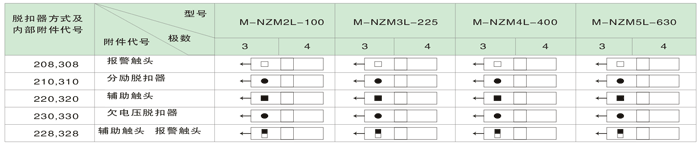
Note: The first digit 2 of the release method and internal nearby component code indicates an electromagnetic (instantaneous) release, and 3 indicates a thermal electromagnetic (compound) release; The last two digits represent the internal attachment code.
Power loss and derating coefficient of circuit breaker
power loss
|
model |
Electrical current (A) |
Three phase total power loss (VA) | |
|
Front and rear wiring of the board |
Plug in wiring | ||
|
M-NZM2L-100 direct heating type (10A) |
ten |
twelve |
fifteen |
|
M-NZM2L-100 Thermal Type (16~100A) |
one hundred |
thirty-five |
forty |
|
M-NZM3L-225 |
two hundred and twenty-five |
sixty-two |
seventy |
|
M-NZM4L-400 |
four hundred |
one hundred and fifteen |
one hundred and twenty-five |
|
M-NZM5L-630 |
six hundred and thirty |
one hundred and eighty-seven |
two hundred |
|
residual current |
I△n |
2I△n |
5I△n |
10I△n | |
|
Non delayed type |
Maximum disconnect time (S) |
zero point two |
zero point one |
zero point zero four |
zero point zero four |
|
Slo-Blo |
Maximum disconnection time |
005/1.15/2.15 |
0.35/1/2 |
0.25/0.9/1.9 |
0.25/0.9/1.9 |
|
Extreme non driving working time △ t (S) |
- |
0.1/0.5/1 |
- |
- | |
|
ambient temperature |
+40℃ |
+45℃ |
+50℃ |
+55℃ |
+60℃ |
|
coefficient |
derating factor |
derating factor |
derating factor |
derating factor |
derating factor |
|
model |
|||||
|
M-NZM2L-100 |
1In |
0.95In |
0.89In |
0.84In |
0.76In |
|
M-NZM3L-225 |
1In |
0.96In |
0.91In |
0.87In |
0.82In |
|
M-NZM4L-400 |
1In |
0.94In |
0.87In |
0.81In |
0.73In |
|
M-NZM5L-630 |
1In |
0.93In |
0.88In |
0.83In |
0.76In |
|
model |
M-NZM2L-100 M-NZM3L-225 M-NZM4L-400 M-NZM5L-630 | |
|
Shell current Imm (A) |
100 225 400 630 | |
|
polar number |
3 4 3 4 3 4 34 | |
|
Rated insulation voltage Ui (V) |
||
|
Rated working voltage Ue (V) |
AC400 AC400 AC400 AC400 | |
|
Rated impulse withstand voltage Uimp (V) |
8000 8000 8000 8000 | |
|
Flying arc distance (mm) |
≯ 50 ≯ 50 ≯ 50 ≯ 50 ≯ 50 | |
|
Breaking ability level |
M H M H M M | |
|
Ultimate short-circuit breaking capacity Icu (KA) |
AC400V |
50 85 50 50 85 50 65 65 |
|
Operating short-circuit breaking capacity Icu (kA) |
AC400V |
35 50 35 50 35 42 42 |
|
Rated residual operating current I △ n (mA) |
Non delayed type |
100/300/500______ |
|
Slo-Blo |
100/300/500 300/500/1000 | |
|
Rated residual non operating current I △ n0 (mA) |
1/2Icu | |
|
Rated residual short-circuit making (breaking) capacity I △ n (kA) |
1/4Icu | |
|
Operational performance (times)
|
energize |
1500 1000 1000 1000 |
|
no power |
8500 7000 4000 4000 | |
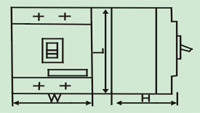 |
W |
92 122 107 142 150 198 210 280 |
|
L |
150 150 165 257 280 280 | |
|
H |
92 92 91 90 106.5 106.5 115.5 115.5 | |
|
shunt release |
||
|
Undervoltage release device |
| |
|
Leakage alarm unit module |
| |
|
auxiliary contact |
| |
|
Alarm contact |
||
|
Electric operating mechanism |
| |
|
Rotate the handle operating mechanism |
| |
|
Rated current of release device (A) |
Thermal release device (ambient temperature+40 ℃) |
Electromagnetic release action current (A) | |
|
1.05In (cold state) does not act |
1.03in (hot state) action | ||
|
Time (h) |
Time (h) | ||
|
10≤In≤63 |
one |
one |
10In±20%
|
|
63≤In≤125 |
two |
two | |
|
125≤In≤630 |
two |
two |
5In±20% 10In±20% |
|
Rated current of release device (A) |
Thermal release device (ambient temperature 40 ℃)
|
Electromagnetic release action current (A) | |||
|
1.0In (cold state) inactive time (S) |
1.20In (hot state) action time (S) |
1.50In (cold state) action time (S) |
7.2In (cold state) inactive time (S) | ||
|
10≤In≤400 |
two |
two |
8min |
6S<TP20s |
12In±20% |

|
Distribution circuit breaker
|
Distribution circuit breaker | |
|
AC230V |
AC400V | |
|
M-NZM2L-100 |
two point six |
three point three |
|
M-NZM3L-225 |
three point eight |
three point three |
|
M-NZM4L-400 |
three point seven |
two point seven |
|
M-NZM5L-630 |
two point three |
two point seven |
 Related Products:
 DZ931 Marine molded case circuit breaker DZ935 Marine miniature circuit breaker DW931 series marine frame circuit breaker WJCT58-II type circuit breaker operating mech.. WJCT58-V type circuit breaker operating mecha.. EVS1P-12/T1250-40 type vacuum circuit breaker.. EVS1P-12/T1250-31.5 type vacuum circuit break.. ZN90-40.5/T2000-31.5 Indoor vacuum circuit br.. EVH1A-40.5/T2500-31.5 type solid sealed pole .. EVH3R-2X31.5/T2000 series railway specific si.. Related articles:
 low-voltage circuit breaker
  Molded Case Circuit Breaker
  Miniature Circuit Breaker Universal circuit breaker Smart Circuit Breaker Residual Current Circuit Breaker DC circuit breaker low-voltage contactor Low voltage transformer relay Counter | timer Low-voltage fuse starter electromagnet resistor Low-voltage arrester power capacitor Low voltage reactor dual power switch Low voltage isolator changeover switch Master Electrical Appliance terminal block plug socket electromagnetic chuck Electrotechnical equipment lighting distribution box Low voltage protector Electric cabinet door lock handle Building electrical appliances
 Home|Quality Commitment|Ordering|Payment method|product delivery|support|Disclaimer|Contact Us
Copyright®2011 www.91way.com Copyright.
Phone:+86-21-66770508 +86-13916500500 Fax:+86-21-66108310
Email:91way@163.com Wechat:40606422
沪ICP备2021005791号  沪公网安备31010702003255号

